Are you tired of lackluster morning coffee or the daily trek to your local cafe? For many coffee enthusiasts, the dream of crafting perfect, barista-quality espresso at home often involves a significant investment in equipment. An espresso machine with a built-in grinder offers an enticing all-in-one solution, promising convenience and freshness right on your countertop. This comprehensive guide will explore everything you need to know about these integrated marvels, from their core components to choosing the ideal model for your lifestyle, ensuring you can pull excellent shots and enjoy delightful coffee beverages without the fuss of multiple appliances.
What is an Espresso Machine?
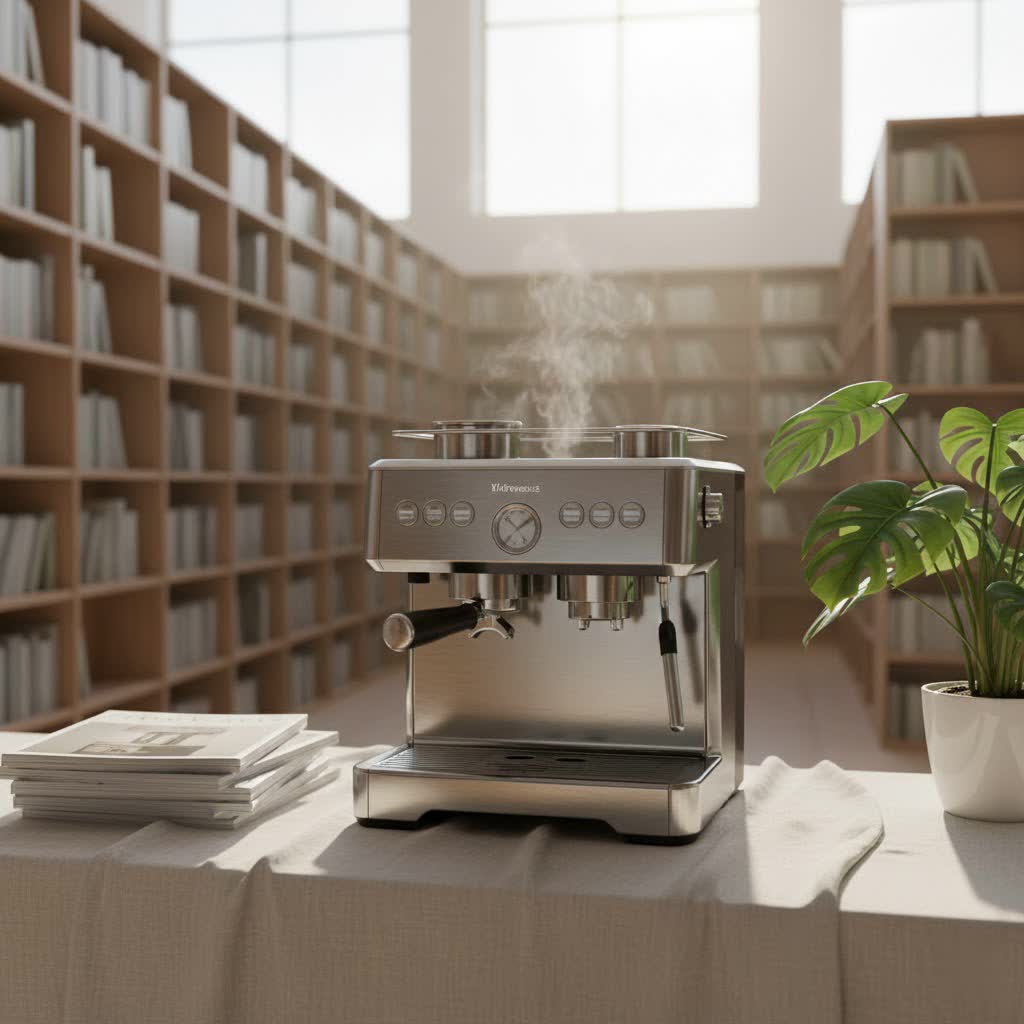
An espresso machine is a specialized coffee brewer that forces hot, pressurized water through a compacted bed of finely ground coffee, known as a “puck.” This process extracts the concentrated essence of coffee, resulting in a rich, aromatic shot of espresso, typically topped with a reddish-brown foam called crema.
The history of espresso machines dates back to early 20th-century Italy, evolving from steam-driven devices to the pump-driven machines we see today. The integration of a grinder into these machines is a more recent innovation, aimed at simplifying the brewing process and ensuring maximum freshness for home users.
Common types of espresso machines include:
- Manual Espresso Machines: Require the user to manually control pressure, offering the most hands-on experience and control.
- Semi-Automatic Espresso Machines: Feature an electric pump for pressure, but the user controls the grind, dose, and extraction time. Many popular machines with built-in grinders fall into this category.
- Automatic Espresso Machines: Automatically stop the water flow after a preset volume, offering more consistency with less manual intervention.
- Super-Automatic Espresso Machines (Bean-to-Cup): Handle everything from grinding beans to tamping and brewing with the push of a button, often including automatic milk frothing. These almost universally feature built-in grinders.
Essential Components of an Espresso Machine
Understanding the critical parts of an espresso machine is key to appreciating how they function and choosing the right one.
- Pump: This component is responsible for generating the necessary pressure (typically 9-15 bars) to force hot water through the coffee grounds. Vibratory and rotary pumps are common types, each with pros and cons regarding noise and durability.
- Boiler: The boiler heats the water to the optimal brewing temperature. Machines can have single boilers (brew and steam at different temperatures, requiring a wait), heat exchange boilers (allow brewing and steaming simultaneously with one boiler), or dual boilers (separate boilers for brew and steam, offering superior temperature stability and simultaneous operation).
- Grouphead: This is the part of the machine where hot water is delivered to the coffee grounds. It connects to the portafilter and ensures even water distribution.
- Portafilter: A handle with a basket that holds the ground coffee. It locks into the grouphead, and water passes through it to extract the espresso. Portafilter size (e.g., 58mm, 54mm) can vary between brands.
- Steam Wand: An arm that delivers pressurized steam for frothing milk, essential for lattes, cappuccinos, and other milk-based drinks. Some machines have manual wands for greater control, while others feature automatic milk systems.
- Integrated Grinder: This is the defining feature. Most built-in grinders are burr grinders (conical or flat), which crush beans consistently, preserving flavor. Blade grinders, which chop beans unevenly, are less desirable for espresso. Adjustable grind settings are crucial for dialing in the perfect shot.
How to Choose the Best Espresso Machine with a Grinder
Selecting an espresso machine with a built-in grinder involves balancing convenience, performance, and budget.
Determine Your Needs
Consider your daily coffee ritual:
- Usage Frequency: Do you make one espresso a day, or multiple drinks for a family gathering? Higher frequency might demand a more robust machine with larger capacities and faster heat-up times.
- Number of Users: A household of one might be fine with a simpler model, while a multi-person household could benefit from features like a dual boiler for continuous use.
- Favorite Coffee Types: If you primarily drink straight espresso, focus on brew quality. If you love lattes and cappuccinos, a powerful steam wand or an automatic milk frother will be paramount.
|
Our Picks for the Best Espresso Machine in 2026
As an Amazon Associate I earn from qualifying purchases.
|
||
| Num | Product | Action |
|---|---|---|
| 1 | CASABREWS 3700 Essential Espresso Machine 20 Bar, Stainless Steel Cappuccino & Latte Machine with Steam Frother for Home, 43.9oz Water Tank, Coffee Gift for Women & Men, Silver |

|
| 2 | De'Longhi Stilosa Manual Espresso Machine, Compact Coffee Maker, 15 Bar Pump Pressure, Manual Milk Frother Steam Wand for Authentic Single & Double Espresso, Lattes & Cappuccinos, Tamper Included |
|
| 3 | CASABREWS CM5418 Espresso Machine 20 Bar, Compact Espresso Maker with Steam Milk Frother, Stainless Steel Coffee Machine with 34oz Removable Water Tank for Cappuccino, Gift for Women or Men, Silver |
|
| 4 | Ninja Luxe Café 3-in-1 Espresso, Drip Coffee and Cold Brew Machine - Integrated Coffee Grinder, Milk Frother, Assisted Tamper & Built-In Espresso Accessory Storage - Stainless Steel - ES601 |
|
| 5 | Breville Barista Express Espresso Machine BES870BSXL, Black Sesame |
|
| 6 | Gaggia Classic Evo Pro - Espresso Machine Jungle Green |
|
| 7 | Gevi Commercial Espresso and Coffee Makers, Professional 20 Bar Espresso Maker with Milk Frother, Stainless Steel Expresso Coffee Machines for Home, Compact Cappuccino Machine, Great Gift |
|
| 8 | Breville Bambino Espresso Machine BES450BSS, Brushed Stainless Steel |
|
| 9 | Breville Barista Express Espresso Machine BES870XL, Brushed Stainless Steel |
|
| 10 | Breville Barista Express Impress Espresso Machine BES876BSS, Brushed Stainless Steel |
|
Set Your Budget
Espresso machines with grinders vary widely in price:
- Entry-Level (Under $500): Often semi-automatic, offering basic grinding and brewing. May have fewer grind settings or less precise temperature control.
- Mid-Range ($500-$1,000): Provides better build quality, more adjustable grind settings, and improved temperature stability. Popular models like the Breville Barista Express often fall here.
- High-End ($1,000+): Features premium materials, advanced controls (e.g., PID temperature control, pressure gauges), dual boilers, and high-quality burr grinders, offering near-commercial performance.
Important Features to Consider
- Pump Pressure (Bar): While 9 bars is ideal for extraction, machines often advertise 15 bars or more. Consistency is more important than sheer power.
- Boiler Capacity and Type: Larger boilers mean more steam and less waiting. Dual boilers are superior for temperature stability and simultaneous brewing/steaming.
- Temperature Control (PID): Proportional-Integral-Derivative controllers maintain a very stable water temperature, crucial for consistent espresso extraction and flavor.
- Grinder Quality & Settings: Look for conical or flat burr grinders with at least 20-30 adjustable grind settings. This allows you to fine-tune the grind for different beans and desired extraction.
- Milk Frother: A manual steam wand offers ultimate control for latte art, while automatic frothers provide convenience.
- Water Reservoir Size: A larger reservoir means less frequent refilling.
- Ease of Cleaning & Maintenance: Consider how easy it is to access and clean the grinder chute, brew group, and drip tray.
Reputable Brands
Brands like Breville, De’Longhi, Gaggia, Rancilio, and Philips are well-regarded for their espresso machines with integrated grinders. Research their warranty and customer service policies.
Comparing Popular Espresso Machine Models with Grinders
Choosing between models often comes down to a trade-off between features, convenience, and control. Here’s a generalized comparison of common types:
| Feature/Model Type | Entry-Level Semi-Automatic (e.g., basic Breville/De’Longhi) | Mid-Range Semi-Automatic (e.g., Breville Barista Express) | Super-Automatic (e.g., De’Longhi Magnifica Evo, Philips 3200) |
|---|---|---|---|
| Price Range | $300 – $600 | $600 – $1000 | $700 – $1500+ |
| Grinder Type | Conical burr, basic settings | Conical burr, 20-30 settings | Conical/Flat burr, 10-15+ settings |
| Pressure | Often 15 Bar (can vary) | 15 Bar pump (regulated to 9 Bar) | 15 Bar pump |
| Temperature Control | Thermoblock/Thermacoil | PID for stability | Thermoblock/PID |
| Milk Frother | Basic manual steam wand | Manual steam wand (some with auto-frothing options) | Automatic frothing system (e.g., LatteGo, milk carafe) |
| User Control | Moderate (grind, dose, tamp, brew time) | High (fine-tune grind, dose, temp, pre-infusion) | Low (push-button, pre-programmed drinks) |
| Maintenance | Manual cleaning, descaling | Manual cleaning, descaling, some grinder cleaning | Auto-rinse cycles, regular deep cleaning/descaling |
| Ideal For | Beginners, small budgets, learning basics | Enthusiasts, balancing control and convenience | Ultimate convenience, minimal effort, variety of drinks |
Using and Maintaining Your Espresso Machine
Proper use and consistent maintenance are vital for delicious espresso and a long-lasting machine.
Preparation
- Proper Setup: Ensure the machine is on a stable, level surface, connected to a grounded outlet, and the water reservoir is filled with filtered water.
- Choose Your Beans: Use fresh, high-quality whole roasted coffee beans. The roast level (medium to dark for espresso) and freshness significantly impact flavor.
- Warm-Up: Always pre-heat your machine. This can take 15-30 minutes for single boilers, ensuring all components, especially the grouphead and portafilter, are at the correct temperature for optimal extraction.
Brewing Espresso
- Grind: Adjust your built-in grinder to a fine setting suitable for espresso. You’ll know it’s right when the coffee flows like warm honey, taking 20-30 seconds for a double shot (approx. 2 oz).
- Dose & Tamp: Grind enough coffee into the portafilter basket (typically 18-20g for a double shot) and tamp it firmly and evenly. Intelligent dosing systems found in some machines (like Breville’s Impress series) can assist with this.
- Extract: Lock the portafilter into the grouphead. Start the extraction. Monitor the flow and adjust grind size as needed – too fast means too coarse, too slow means too fine.
- Steam Milk (Optional): If making milk-based drinks, purge the steam wand first, then submerge it in cold milk. Texture the milk by creating a whirlpool, then heat to desired temperature (140-160°F or 60-70°C).
Cleaning and Maintenance
- Daily Cleaning: After each use, wipe down the steam wand, rinse the portafilter and basket, and empty/rinse the drip tray. Backflush the grouphead (using a blind basket and cleaner) regularly according to manufacturer instructions.
- Weekly/Bi-Weekly Cleaning: Deep clean the grinder by emptying beans and brushing out any residue. Some grinders have removable burrs for thorough cleaning.
- Monthly/Bi-Monthly Descaling: Mineral buildup from water can clog internal components. Use a descaling solution recommended by the manufacturer. The frequency depends on your water hardness and machine usage.
- General Care: Use filtered water to minimize mineral buildup. Avoid abrasive cleaners on stainless steel.
Common Issues and Troubleshooting
Even the best machines can encounter problems. Here are some common issues and their quick fixes:
- Machine Not Heating: Check power connections. If the machine has a circuit breaker, ensure it hasn’t tripped. It could also indicate a faulty heating element or thermostat, requiring professional service.
- Weak Pressure/Slow Flow:
- Grind is too fine: Adjust the grinder to a coarser setting.
- Too much coffee (overdosing): Use less coffee in the portafilter.
- Clogged grouphead: Perform a backflush or use a descaling solution.
- Faulty pump: May require professional repair.
- Coffee Flows Too Fast/Weak Espresso:
- Grind is too coarse: Adjust the grinder to a finer setting.
- Not enough coffee (underdosing): Use more coffee.
- Uneven tamp: Ensure firm and level tamping.
- Machine Leaks Water:
- Loose water tank: Ensure the reservoir is seated correctly.
- Gasket issues: The grouphead gasket might be worn and need replacement.
- Internal leak: Could be a hose or pump issue; professional repair is recommended.
- Grinder Not Working: Check for blockages in the bean hopper or burrs. Ensure the hopper is properly seated if it has a safety switch.
For persistent issues, always consult your machine’s user manual or contact customer support.
Where to Purchase Your Espresso Machine
You have several options when buying an espresso machine with a grinder:
- Retail Stores: Large appliance retailers (e.g., Best Buy, Williams Sonoma) or specialty coffee stores often have models on display. This allows you to see the machine in person and ask questions.
- Online Retailers: Websites like Amazon, Breville’s official store, or specialized coffee equipment sites often offer a wider selection, competitive pricing, and user reviews. Be sure to buy from reputable sellers.
- Used Machines: While potentially more affordable, buying a used machine carries risks regarding wear and tear, hygiene, and warranty. Only consider this if you are knowledgeable about repairs or can thoroughly inspect the machine.
A Detailed Buying Guide for Integrated Grinder Espresso Machines
Before making your final decision, consider these factors:
Pre-Purchase Considerations
- Kitchen Space: Measure your counter space. Even though integrated units save space over separate machines, they can still be substantial.
- Power Requirements: Check the machine’s wattage and your kitchen’s electrical outlets to ensure compatibility.
- Noise Level: Grinders can be noisy. If your kitchen is open plan or you live with light sleepers, research models known for quieter operation.
- Aesthetics: Espresso machines can be a prominent kitchen appliance. Choose a design and finish that complements your kitchen decor.
Essential Accessories
While the machine comes with a grinder, some accessories will enhance your experience:
- Tamper: Many machines include a basic tamper, but an upgraded, heavier, calibrated tamper can improve consistency.
- Milk Pitcher: Essential for frothing milk with a steam wand. Stainless steel is preferred for temperature control.
- Knock Box: A container for quickly disposing of used coffee pucks.
- Cleaning Supplies: Espresso machine cleaner, descaling solution, and a grouphead brush are necessities.
- Precision Scale: A small digital scale for accurately weighing coffee beans and espresso shots can significantly improve consistency.
Reading Reviews and Comparing Prices
- User Reviews: Look for consistent feedback on brew quality, ease of use, durability, and customer service. Pay attention to reviews from users with similar needs to yours.
- Expert Reviews: Consult reputable coffee blogs and consumer testing sites for in-depth analyses.
- Price Comparison: Check multiple retailers, both online and in-store, to find the best deals, especially during sales events.
> “An espresso machine with a built-in grinder is a fantastic starting point for anyone serious about elevating their home coffee experience. While dedicated grinders can offer ultimate precision, the convenience and quality of a good integrated system are hard to beat for daily use.” – Maria Rossi, Head Barista and Coffee Educator
Conclusion
An espresso machine with a built-in grinder is a powerful tool for any home barista seeking convenience without sacrificing the fresh, rich flavors of well-made espresso. By combining two essential pieces of equipment into one, these machines offer a streamlined workflow, save valuable counter space, and provide an excellent entry point into the world of specialty coffee. While they present a trade-off between ultimate customization and all-in-one simplicity, selecting the right model based on your needs, budget, and desired features will unlock a world of delicious coffee beverages right in your kitchen. Are you ready to grind, brew, and savor your perfect cup?
Frequently Asked Questions
Is an espresso machine with a built-in grinder a good choice for beginners?
Yes, for many beginners, an espresso machine with a built-in grinder is an excellent choice. It simplifies the setup and workflow, eliminating the need to research and purchase a separate grinder, making the initial learning curve less daunting.
Can I get the same grind quality from a built-in grinder as a standalone grinder?
Generally, high-end standalone grinders offer superior grind consistency and a wider range of fine adjustments compared to most built-in grinders. However, many integrated grinders, especially those in mid-to-high-range machines, provide sufficient quality for excellent espresso.
How often should I clean the grinder part of my espresso machine?
It’s recommended to clean the grinder chute and hopper regularly, ideally weekly, to prevent stale coffee grounds and oils from impacting flavor. A deeper cleaning of the burrs should be done every few months or as per the manufacturer’s instructions.
Are espresso machines with built-in grinders louder than separate units?
Since the grinder and brewing components are in one unit, the overall machine can feel quite loud during grinding. The noise level depends on the specific model and grinder type, but generally, all grinders produce some noise.
What is the advantage of a dual boiler over a single boiler in an integrated machine?
A dual boiler system allows you to brew espresso and steam milk simultaneously, without any waiting time in between. A single boiler machine requires you to wait for the boiler to heat up to steaming temperature after brewing, or vice-versa.
